

Hard Truths
angry black women deserve to have their stories told too

Depression is a funny thing, especially when it's a result of grief. It takes shape differently for each person—anger, seclusion, panic, exhaustion. But sometimes the depression was always there and the grief simply acted as a catalyst, destroying any sliver of joy left. Or sometimes the grief is used as an excuse, you just need to move on from this death and things will go back to how they used to be. But if you’ve always been angry, lonely, anxious, exhausted, or to put it simply - clinically depressed. What is there to move on from? The truth is you’ve always been like this, your mother was hard on you which you internalised and now you're hard on everyone else. But eventually, the sun will shine and you will talk to the people in your life and you will in fact, move on.
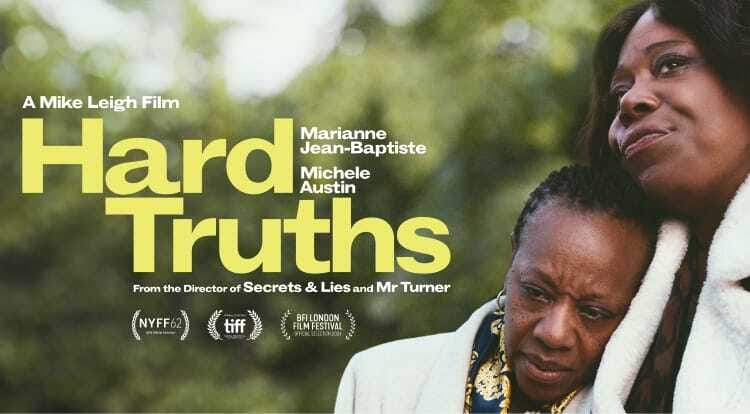
Hard Truths, written and directed by Mike Leigh, is a sombre but at times hilarious drama about a Caribbean-British family. The main focus of the film is on Pansy (Marianne Jean-Baptiste), a middle-aged mother and wife who is very clearly at a dangerous point in her depression. She spends her days in constant fear of everything and everyone around her. As an attempt to control the fear she obsessively cleans her already sterile home, sleeps during the day, and tries to avoid leaving the house at all costs. But it isn’t enough. The fear presents itself as hostility and anger towards herself and everyone she interacts with. Whether it’s her 22 year old son who spends all his time in his room or the sales assistant at a furniture store, she will find something to complain about. She goes on these long rants full of hatred for the smallest of things and at first, they’re quite funny because there is some truth to what she is saying (she’s right why do babies need so many pockets?!), but this constant lashing out quickly turns uncomfortable to sit through. She is unliked by the majority of people in her life, and she is fully aware of that fact.
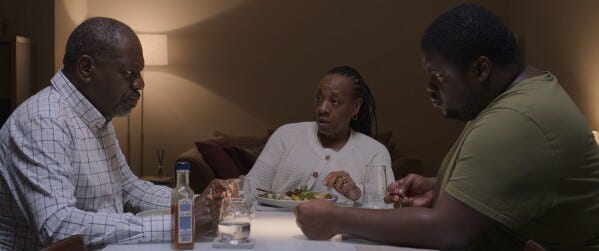
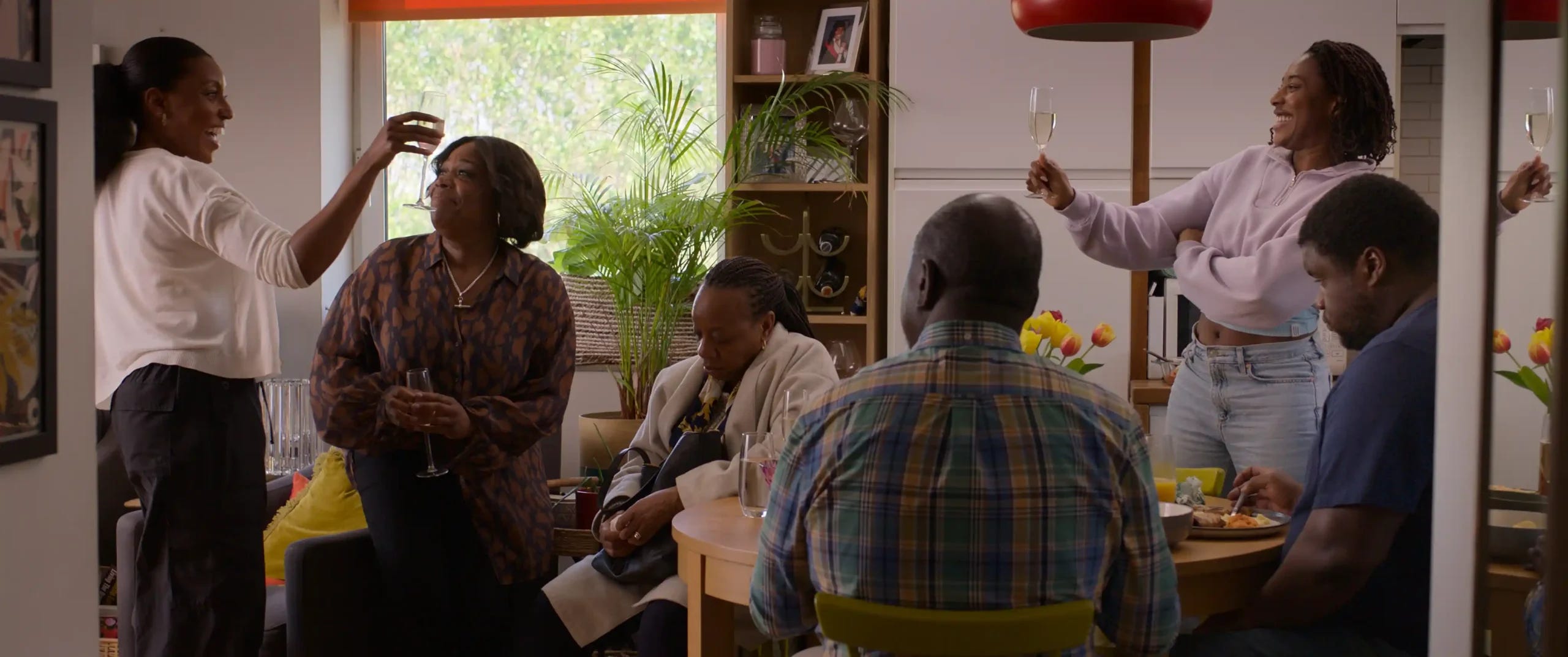
The one person who does stand by her side is her sister Chantelle (Michele Austin), a loving mother of 2 adult daughters whom she has a very close relationship with. She lives in a flat that looks and feels like a home decorated with plants and family photos, the complete opposite of Pansy. At the emotional peak of the film, Chantelle drags Pansy to visit their mother’s grave on the 5th anniversary of her death. The two bicker about flowers and cleaning supplies which prompts Chantelle to ask the question everyone is wondering - why are you so angry? Pansy thinks for a moment before sadly answering that she doesn't know. We learn parts of their upbringing through multiple conversations between the two but it’s clear Mike Leigh wanted to focus on who Pansy is in the present instead of forcing a sob story about the past. While her relationship with her mother growing up and the sudden death may be the cause of her depression and hostility, it is not an excuse. It’s easy to throw around the “hurt people hurt people” quote but it is always more complex than that.
Pansy’s depression comes front and centre when she starts to open up to her sister, stating she is tired of living. They both are confronted with the hard truth that Pansy is in danger regarding her mental health but how are you supposed to help someone who doesn't want to be helped? Mental health in black communities is often overlooked so knowing she probably feels that her mental pain is unimportant and so relies on her physical aches and pains to get attention is extremely hard to watch. There isn’t a big resolution at the end but there is a sliver of hope. Pansy goes outside in the garden and soaks in the sun. This might not seem like much, but that simple task goes against everything she has told herself to believe. I don’t see her going to therapy or taking antidepressants anytime soon, but it’s clear she wants to move on from the things holding her back and hopefully change for the better.
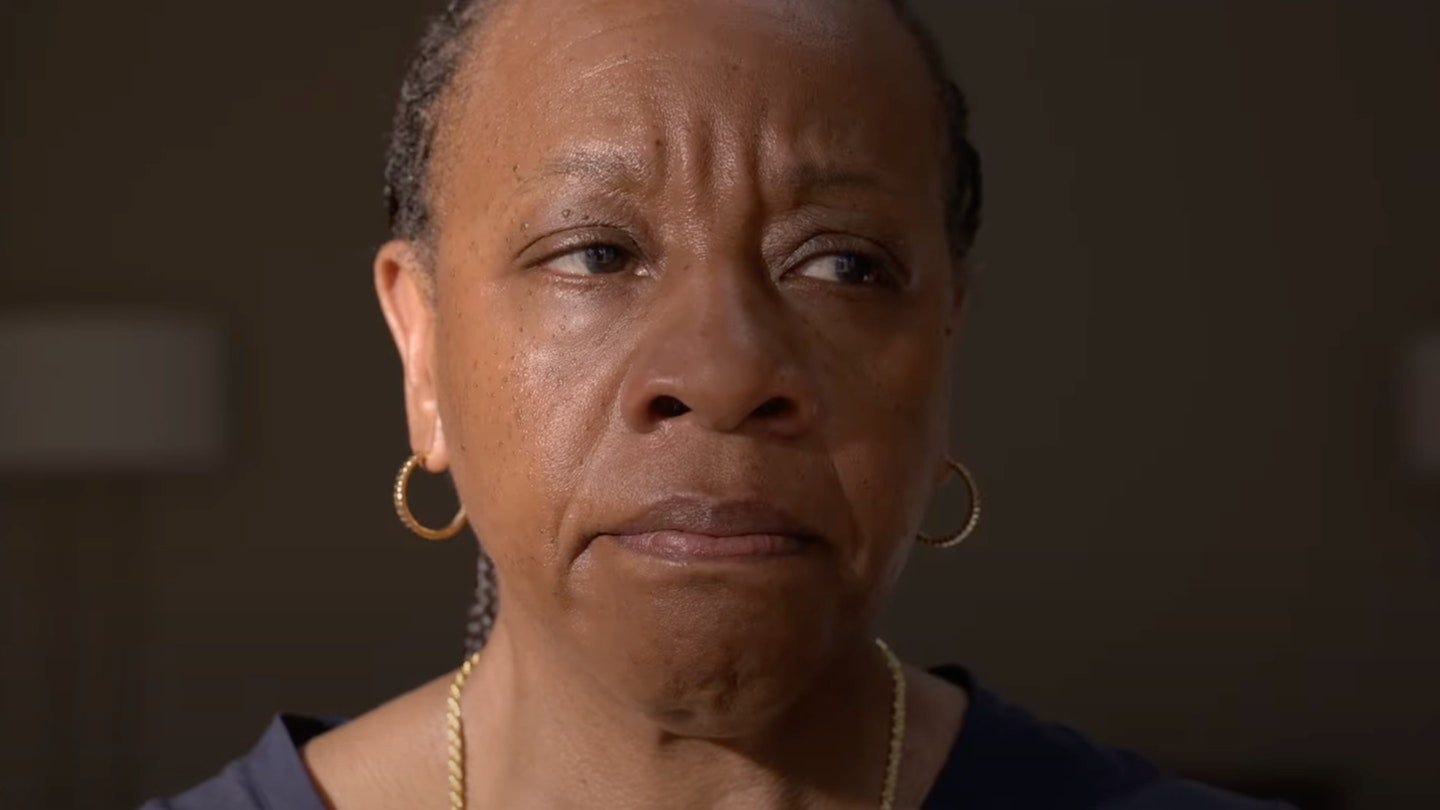
This is my first Mike Leigh film but I will definitely be watching some of his others. While Pansy is the focus, we still get to see the lives of the other people in her life including her son and husband who get their own mini emotional arc. Visually, the film is stunning. There are several close-ups in the final act where we see clearly on the character's faces that everything has changed and it is gut wrenching. There is so much life in this film and every emotion feels so real, it’s a truly impressive piece of work. These black working-class characters are met with so much compassion and are shaped with a deep familiarity that you can't help but resonate with. I am deeply thankful for a story like this being told and despite it being a white man behind the camera, it’s Marianne Jean-Baptiste and Michele Austin that brought the film to life. It’s so rare to see unapologetically black women on screen front and centre without their storyline being solely based on helping a white character or being made into a martyr. The pain Pansy feels isn’t romanticised, it’s brutality realistic with every flaw on display - a level of openness we don’t get to see from black women. She wasn’t changed to be more palatable to appease a wider audience, she is wholeheartedly herself.
Marianne Jean-Baptiste as Pansy is easily one of the best performances of the year and despite making history as the first actress of colour to win the Best Actress trifecta from the National Society of Film, she was snubbed at the Oscars. Yes her character is unlikable, but that should not deter you from appreciating how incredible her performance was. White actors get the privilege of being praised for playing insufferable characters, but when it’s an angry black woman on screen, the actress is criticised or ignored. Black women deserve to see these stories on screen and they deserve to be awarded for them too. While I don’t hold much hope for The Academy, I do hope the general film community starts to recognise these talents.
putting this on my watch list for sure